

Jawline Filler in Istanbul: Non-Surgical Jawline Contouring
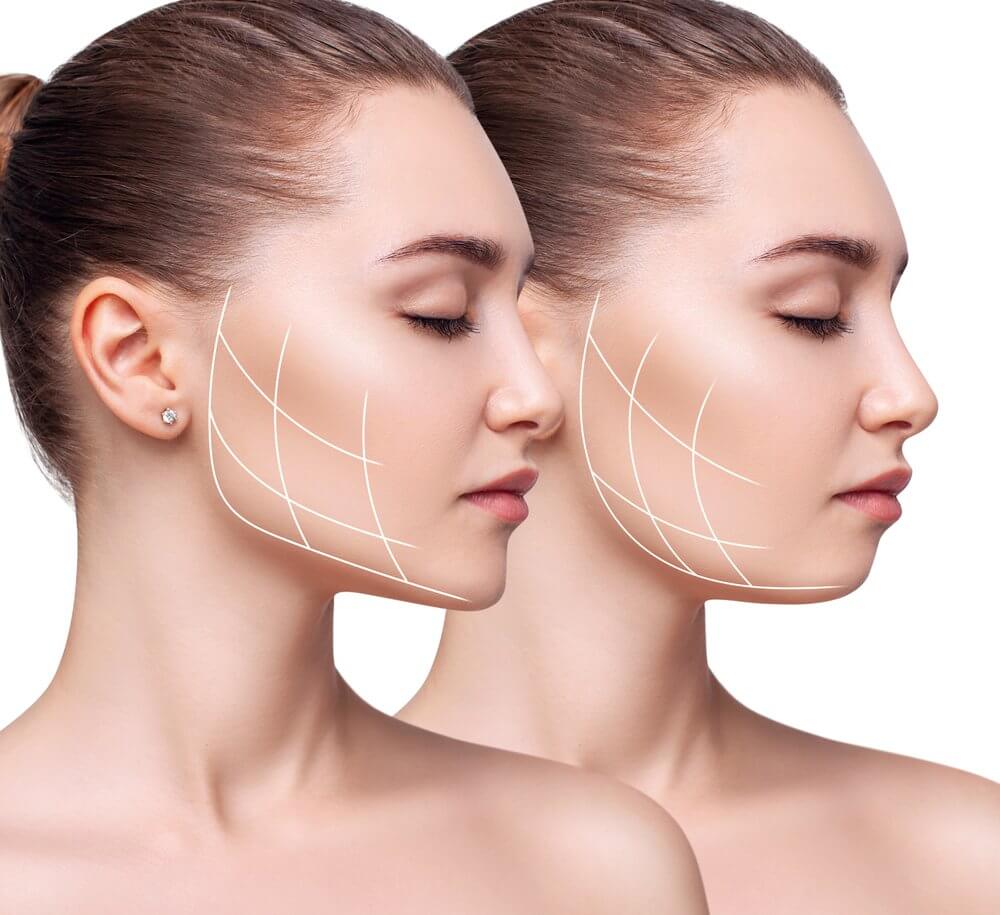
A sharp, well-defined jawline is one of the most recognisable signs of youth and attractiveness. It separates the face from the neck, frames the lower face and gives the profile strength and elegance. With age, weight changes or simply genetics, the jawline can become soft, uneven or poorly defined. The lower face may look heavier, jowls may appear, and the face may seem to “merge” with the neck.
Jawline filler is a non-surgical treatment that restores and sharpens the contour of the lower face in a single session. I am Op. Dr. Akın Şahin, a European Board certified facial plastic surgeon in Istanbul. In this guide, I explain how jawline contouring works, who it suits, and how to achieve a result that looks strong, defined and natural.
What Is Jawline Filler?
Jawline filler is the injection of a dense, structural filler along the edge of the lower jaw (the mandible), from the chin to the angle of the jaw below the ear. The filler sharpens the jaw line, defines the jaw angle, corrects asymmetry and camouflages early jowls.
Jawline filler is often combined with chin filler, as the chin and jawline work together to define the lower face. The procedure takes 20–30 minutes, requires no incisions, and you can return to normal activities the same day.
Jaw Anatomy and Facial Proportions
The mandible is the foundation of the lower face. Its shape is defined by three key points: the chin, the jawline (the lower border of the jaw), and the jaw angle (the corner below the ear). The relationship between these points determines whether the face looks oval, square, heart-shaped or round.
With ageing, the bone of the jaw gradually loses volume, the ligaments that support the soft tissues weaken, and fat descends. As a result, the once-sharp jawline becomes blurred, jowls appear, and the face looks more square and tired. Jawline filler restores the structural support that has been lost, re-creating a clean, continuous line.
In younger patients, the problem is usually genetic: a small jaw, a weak jaw angle or a lack of definition between the face and neck. In these cases, jawline filler enhances the natural structure rather than restoring lost volume.
Materials and Technologies Used for Jawline Filler
The jawline requires a filler that can mimic bone. I mainly use:
- High-density hyaluronic acid (HA): This is the most commonly used material. It is highly compatible with the body, provides strong lift and definition, and can be dissolved with hyaluronidase if needed. HA fillers with a high G-prime (lifting capacity) are preferred for the jawline.
- Calcium hydroxylapatite (CaHA): This filler adds structure and stimulates collagen production. It can be a good option for patients who want a longer-lasting result and who have previously had HA filler.
- Biostimulators: These are used selectively to improve skin quality and firmness along the jaw.
For first-time patients, I almost always recommend hyaluronic acid because it is reversible and gives a soft, natural feel.
Jawline Filler for Men: Masculinisation
A strong, wide and angular jaw is a hallmark of a masculine face. Many men come to me because they feel their jaw is too narrow or soft, or because they want a more defined profile in photos. In men, filler is placed to:
- Increase the width of the jaw at the angle
- Create a sharp, straight line along the lower border of the jaw
- Strengthen and widen the chin
Men usually need more filler than women, often 4–6 ml in total, sometimes in two sessions. The result is a more athletic, defined lower face that still looks natural. I explain filler quantities in detail in my article how much jawline filler do I need?.
Jawline Filler for Women
In women, the goal is usually not a wide, square jaw but a slim, elegant and continuous line from the ear to the chin. Filler is placed to define the jaw border, soften jowls and create a gentle V-shape, often combined with a slightly projected chin. Women typically need 2–4 ml.
Who Is a Good Candidate for Jawline Filler?
You may be a good candidate for jawline filler if you:
- Feel your jawline is soft, narrow or poorly defined
- Have early jowls or a slightly uneven jaw contour
- Have a small or weak jaw angle, making your face look round
- Have asymmetry between the two sides of the jaw
- Would like a stronger, more masculine jaw (men) or a slimmer, more elegant contour (women)
- Want to improve your profile without surgery
Jawline filler may not be the best choice if you have a lot of loose skin or a large amount of fat under the chin and jaw. In these situations, filler alone can make the lower face look heavy, and a surgical approach or a combination treatment is usually better.
Jawline Filler for Mature Patients
In patients over 45, the jawline often loses definition because of bone loss, fat descent and skin laxity. Here, jawline filler has a different purpose: rather than creating a sharp, angular jaw, it restores the structural support that has been lost and camouflages early jowls.
Filler is placed in strategic points: in front of the jowl to fill the “pre-jowl sulcus”, at the jaw angle to restore support, and at the chin. This creates a smoother, continuous jaw line and a fresher lower face. When skin laxity is more advanced, I often combine filler with Endolift to tighten the skin, or recommend a face and neck lift for longer-lasting results.
Your Consultation for Jawline Filler
At your consultation, I examine your face from the front, both sides and from below, and assess your bone structure, skin quality, masseter muscles and fat distribution. I ask what you would like to change and how strong or subtle you want the result to be. Many patients bring photos of jawlines they like, which helps us agree on a realistic goal.
I then explain how much filler you are likely to need, whether it is best done in one or two sessions, and whether other treatments, such as masseter slimming or Endolift, would give a better overall result.
How Is Jawline Filler Performed?
- Analysis and planning: I assess your face from the front and in profile, decide where definition is needed and mark the key points.
- Cleansing and numbing: The skin is disinfected and a numbing cream or local anaesthetic is applied.
- Injection: Filler is placed deep along the jaw bone and at the jaw angle with a needle, and shaped along the jaw border with a blunt cannula.
- Moulding and review: The filler is gently moulded, and we review the result together in the mirror.
The whole process usually takes 20–30 minutes.
Before and After Jawline Filler: What to Avoid
Before treatment:
- Stop aspirin, ibuprofen, fish oil, vitamin E and similar supplements about one week before treatment, unless prescribed by your doctor.
- Avoid alcohol for 24 hours before your appointment, as it can increase bruising and swelling.
- Tell me about any previous fillers or facial surgery.
After treatment:
- First 24 hours: Do not wash your face vigorously or apply make-up. Avoid touching the area.
- First 3 days: Avoid saunas, hammams, sunbathing and very hot showers.
- First 48 hours: Avoid strenuous exercise.
- Two weeks: Avoid dental treatment and facial massages.
- Sleep on your back for the first few nights.
How Long Does Jawline Filler Last?
Jawline filler usually lasts 12–18 months. The jaw area moves relatively little, and filler placed deep on the bone tends to last well. Calcium hydroxylapatite can last up to two years. Longevity is affected by your metabolism, physical activity, smoking and sun exposure. Many patients choose a smaller top-up after a year to maintain their result.
Jawline Filler Results: Timeline
- Immediately: The jaw looks more defined, although swelling may make it appear slightly wider than the final result.
- Days 1–3: Swelling and tenderness are at their peak and then start to settle.
- Week 1: Most swelling and bruising have resolved; the contour looks more natural.
- Week 2: The filler has integrated with the tissues and the final result is visible. This is the right time for a follow-up and, if needed, a small touch-up.
- 12–18 months: The filler gradually breaks down. A smaller top-up is usually enough to maintain the result.
Why Choose a Facial Plastic Surgeon for Jawline Filler?
The jawline is close to important structures, including the facial artery, which runs over the jaw bone in front of the masseter muscle. Safe jawline contouring requires precise knowledge of where these structures lie and at which depth filler should be placed.
As a head and neck and facial plastic surgeon, I operate on this region regularly, including neck liposuction, face and neck lifts and chin implant surgery. This surgical perspective allows me to design a jawline that suits your bone structure, avoid overfilling and recommend surgery honestly when it would serve you better.
Jawline Filler Myths and Facts
- Myth: “Jawline filler makes the face look heavy.” Fact: When correctly planned, jawline filler makes the face look slimmer by creating a clear separation between the face and neck.
- Myth: “Jawline filler is only for men.” Fact: Women benefit just as much, but the treatment is designed differently.
- Myth: “Once you stop, your jaw will sag.” Fact: When filler dissolves, the jaw returns to its previous state. It does not become worse.
- Myth: “More filler means a better result.” Fact: Overfilling creates an artificial, wide face. Balance is more important than volume.
Side Effects and How They Are Managed
Common, temporary side effects include swelling, tenderness and small bruises, which settle within a few days to a week. You may feel some stiffness when chewing for the first couple of days.
Rare complications include lumps, asymmetry, infection and vascular occlusion. Asymmetry and lumps can be corrected with massage, additional filler or dissolving. Vascular complications are rare but serious, which is why jawline filler should only be performed by a doctor with expert knowledge of facial anatomy who can recognise and treat any problem immediately. I keep hyaluronidase and an emergency protocol available at every treatment.
Why Choose Non-Surgical Jawline Contouring? (Filler vs Implant)
Jawline definition can also be achieved with surgery, such as jaw implants or neck liposuction. Filler has several advantages:
- No incisions and no general anaesthesia
- Immediate results and no downtime
- The result can be adjusted gradually
- Hyaluronic acid filler is reversible
Surgery may be better if you need a very large change, want a permanent result or also have significant fat or loose skin under the jaw. In these cases, I may recommend double chin removal or a face and neck lift. If you are considering a permanent chin enhancement, read my article chin filler vs chin implant.
Treatments Combined With Jawline Filler
- Chin filler: Almost always considered together with the jawline for a balanced lower face.
- Masseter anti-wrinkle injections: In patients with a wide, square jaw caused by large chewing muscles, relaxing the masseter slims the lower face. See anti-wrinkle injections.
- [Endolift](https://drakinsahin.com/en/endolift/): Tightens the skin and reduces small fat deposits along the jaw.
- [Endolift for double chin](https://drakinsahin.com/en/endolift-double-chin/): Reduces fat under the chin to sharpen the jaw-neck angle.
Jawline Design According to Face Shape
- Round face: Defining the jaw angle and lengthening the chin makes the face look slimmer and more oval.
- Square face: Often benefits more from masseter slimming than from filler at the jaw angle; filler is placed mainly at the chin.
- Heart-shaped face: A narrow lower face benefits from subtle filler along the jawline to balance a wider forehead.
- Long face: Filler is placed mainly at the jaw angles to add width, while lengthening the chin is avoided.
Jawline Filler Before and After
The change after jawline filler is most visible in three-quarter and profile views. The jaw line becomes sharper and continuous, the jaw angle more visible, jowls less noticeable and the neck appears more defined. You can see examples in my gallery.
Can Jawline Filler Reduce a Double Chin?
Jawline filler does not remove fat, but it can make a mild double chin look smaller by strengthening the jaw and creating a clearer border between the face and neck. When the jaw and chin are well defined, the skin under the chin is supported and appears tighter. For patients with more fat under the chin, combining filler with Endolift or liposuction gives the best result.
Frequently Asked Questions (FAQ)
Is jawline filler painful?
Most patients feel only mild pressure. Numbing cream and the anaesthetic contained in the filler make the treatment comfortable.
How much jawline filler will I need?
Women usually need 2–4 ml and men 4–6 ml, depending on the starting point and the desired result.
When will I see the final result?
You see an immediate improvement. The final result is visible after about two weeks, when swelling has completely settled.
Can jawline filler be dissolved?
Yes. Hyaluronic acid fillers can be dissolved with hyaluronidase.
Is jawline filler done in one session?
Women often achieve their result in one session. Men who need a larger amount of filler may benefit from two sessions two to four weeks apart, which gives a more natural, balanced result.
Can I chew normally after jawline filler?
Yes. You may feel slight tenderness when chewing for a day or two. Choose softer foods if needed and avoid chewing gum for the first few days.
Can I fly after jawline filler?
Yes. You can usually fly the next day after jawline filler istanbul. If you are travelling from abroad, I recommend staying at least one night in Istanbul so I can check your result.
How much does jawline filler cost?
The cost depends on the amount of filler needed. You can find detailed information on my jawline and chin filler cost in Turkey page.
How do I book?
You can contact my clinic by WhatsApp or phone. If you are abroad, send front and profile photos for a preliminary assessment.
