
What Are Jawline and Chin Fillers?
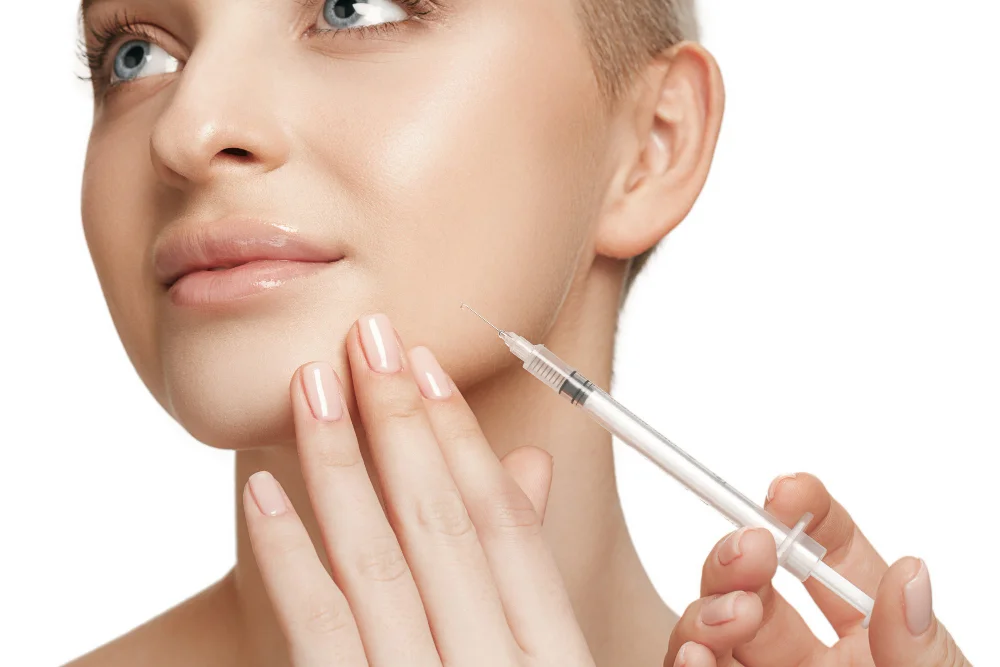
Jawline and chin fillers are non-surgical treatments in which a firm, specially designed gel is injected along the jawbone and around the chin to add definition, projection and structure. They are often described as non-surgical jawline contouring and non-surgical chin augmentation, because they reshape the lower face without incisions, implants or general anaesthesia.
The fillers used for the jaw and chin are different from those used for the lips. They are made from hyaluronic acid, but with a firmer, more cohesive structure that can support the tissues and mimic bone. In my practice, I use premium, internationally approved products such as Juvederm Volux and Restylane, which are specifically designed for chin and jawline augmentation. These fillers hold their shape well and give a natural, structural result.
Although the treatments are often performed together, jawline filler and chin filler have different aims. Jawline filler defines the line of the jaw from the ear to the chin, while chin filler changes the projection, length and shape of the chin itself. Many patients benefit from both, because the jaw and chin work together to create a balanced lower face. I explain this in more detail in the next section.
Jawline Filler vs Chin Filler: What’s the Difference?
Chin filler focuses on the chin itself. It can bring a receding chin forward, lengthen a short chin, make a round chin more defined or correct asymmetry. Because the chin is the central point of the profile, even a small amount of chin filler can dramatically improve the balance between the nose, lips and neck. For many patients, chin filler alone transforms the side profile.
Jawline filler focuses on the line of the jawbone, from the angle of the jaw below the ear to the front of the chin. It creates a sharper, more sculpted edge, separates the face from the neck and can reduce the appearance of early jowls. Jawline filler usually requires more product than chin filler, because the treatment area is larger and covers both sides of the face.
In practice, the two treatments are closely connected. A defined jawline without a balanced chin can look unfinished, and a stronger chin without jaw definition can look isolated. During your consultation, I assess your face from the front and side and recommend chin filler, jawline filler or a combination, depending on what will give you the most harmonious result. If you are also considering a permanent option, read chin filler vs chin implant: which is right for you?
Why Are Jawline and Chin Filler Injections Performed?
The most common reason for jawline and chin filler injections is to create a more defined, balanced and attractive lower face. Many patients feel their face looks round, soft or undefined, especially in photos. Adding structure to the chin and jaw instantly makes the face look sharper and more sculpted, and gives a clear separation between the face and the neck.
Chin filler is also performed to improve facial proportions. A small or receding chin can make the nose look bigger, the lips more prominent and the neck shorter. This is why chin filler is often recommended for patients who are unhappy with their profile or who are considering rhinoplasty. In some cases, improving the chin is enough to balance the nose without surgery.
Jawline filler is also an effective anti-aging treatment. With age, the jawbone loses volume, the skin loosens and small jowls appear, blurring the line of the jaw. Carefully placed filler restores the jawline’s contour and provides support to the lower face, creating a fresher, more youthful look. It is often combined with other treatments, such as double chin liposuction, for an even sharper result.
What Causes a Weak Jawline and Small Chin?
The most common cause of a weak jawline or small chin is genetics. The size and shape of the jawbone and chin are largely inherited. Some people naturally have a short or receding chin, called retrogenia, or a narrow, less defined jaw. These features are present from adulthood and do not change with weight loss or exercise.
Aging is the second major factor. As we get older, the bones of the face gradually lose volume, including the jawbone and chin. The fat pads of the face move downward, the skin loses collagen and elasticity, and jowls develop. Together, these changes soften the jawline and make the chin look smaller and less defined, even in people who had a strong jaw when they were younger.
Lifestyle and other factors also play a role. Excess fat under the chin, poor posture, dental problems, tooth loss and orthodontic changes can all make the lower face look less defined. In some patients, the problem is not a small chin but a wide jaw muscle, which can be slimmed with masseter botox. Understanding the real cause is the key to choosing the right treatment.
Who Is a Good Candidate for Jawline and Chin Fillers?
A good candidate for jawline and chin fillers is a healthy adult who wants a more defined jawline, a stronger chin or a more balanced profile without surgery. Most of my patients are between 20 and 60 years old. Younger patients usually want to correct a naturally weak chin or soft jawline, while older patients often want to restore definition lost with age.
You are likely to be a good candidate if you have a small or receding chin, a soft or undefined jawline, mild jowls, an unbalanced profile, or mild asymmetry of the chin or jaw. Non-surgical chin augmentation is also an excellent option for patients who want to “test” the effect of a stronger chin before deciding on a chin implant.
Fillers are not recommended during pregnancy or breastfeeding, during an active skin infection in the treatment area, or for patients with certain autoimmune conditions or allergies to filler ingredients. If you have a lot of fat under the chin or very loose skin, filler alone may not be enough, and double chin liposuction or a neck lift may give a better result. I always review your anatomy and medical history to recommend the safest and most effective option.
Jawline and Chin Fillers for Men
Jawline filler for men has become one of the most popular male aesthetic treatments. Many men want a sharper, stronger, more masculine jawline, the kind that looks good in photos and makes the face look leaner. Because the treatment is non-surgical and has no downtime, it fits easily into a busy schedule.
The goals for men are different from those for women. Men usually want a wider, more angular jaw and a square, strong chin, while women often prefer a slimmer, more tapered V-shaped lower face with a softer chin. This affects where the filler is placed, how much is used and which product is chosen. Men also usually need more filler, because their faces are larger and the bone structure is heavier.
A natural male result should never look artificial or “overfilled”. My approach is to strengthen your own features, defining the angle of the jaw and adding projection to the chin while keeping the face masculine and natural. Many men combine jawline and chin fillers with botox or double chin liposuction for a complete lower-face refresh.
How Are Jawline and Chin Filler Injections Performed?
Every treatment begins with a detailed consultation. I examine your face from the front, side and at an angle, at rest and while smiling. I assess the size and position of your chin, the angle and contour of your jaw, your skin quality and your overall facial proportions. Together, we decide whether you need chin filler, jawline filler or both, and how much product is required. For international patients, the first assessment can be done online through photos.
Before the injection, the skin is cleaned and a numbing cream can be applied. The fillers I use contain lidocaine, a local anaesthetic that makes the treatment much more comfortable. I usually use a blunt-tip cannula for the jawline, which reduces bruising and improves safety, and a fine needle for deeper placement on the chin bone when precision is needed.
The treatment usually takes 30–45 minutes. I inject in small, controlled amounts, checking symmetry and proportion throughout, and shape the filler gently for a smooth contour. Because the jaw and chin area contains important blood vessels and nerves, a thorough knowledge of facial anatomy is essential. As a head and neck surgeon, this anatomy is part of my everyday work. You will see the result immediately, and you can return to your hotel or work the same day.
Jawline and Chin Filler Recovery Process
The jawline and chin filler recovery process is quick and simple. Immediately after treatment, you may notice mild swelling, redness and small injection marks. The area may feel firm or slightly tender, especially when chewing or opening the mouth wide. These effects are normal and usually settle within a few days.
Swelling typically peaks in the first 24–48 hours and improves significantly within 3–5 days. Small bruises can occur, especially along the jawline, and usually fade within a week. The filler softens and settles into the tissue over about two weeks, which is when you see the final result. Most patients return to work the next day.
To support healing, avoid strenuous exercise, saunas, alcohol and very hot environments for 24–48 hours. Sleep on your back for the first few nights, and avoid pressing, massaging or resting your chin in your hands. Avoid dental treatments for two weeks if possible. Most international patients fly home the day after treatment.
Jawline and Chin Filler Cost Turkey 2026
The total cost of treatment depends mainly on how many millilitres of filler you need, which product is used and the experience of the doctor. In my Istanbul practice, filler for the jaw and chin costs between $150 and $300 per ml in 2026, depending on the brand. The price includes your consultation, the treatment and a two-week follow-up check.
Chin Filler Cost Turkey
Chin filler cost Turkey is usually lower than jawline treatment, because the chin needs less product. Most patients need 1 to 2 ml of chin filler, which means a typical chin filler price of around $250–$600. A small refinement of chin shape may need only 1 ml, while a more noticeable change in projection may need 2 ml.
Jawline Filler Cost Turkey
Jawline filler cost Turkey depends on how much definition you want and the size of your face. Most patients need 3 to 6 ml for both sides of the jaw, which means a typical jawline filler price of around $500–$1,500. Men often need more product than women. A combined jaw and chin treatment usually requires 4–8 ml. I explain how much filler different faces need in how much jawline filler do I need?
Compared internationally, jawline filler in Turkey offers significant savings. In private UK clinics, 1 ml of jaw or chin filler typically costs £300–£500, and a full jawline treatment often exceeds £1,500–£2,500. In the United States, prices are usually even higher. A lower price in Turkey does not mean lower quality; it reflects lower operating costs. In my practice, every treatment is performed personally by me with original products.

Jawline and Chin Filler Before and After
Jawline filler before and after photos usually show a sharper, more defined jaw edge, a clearer separation between the face and neck, and a slimmer-looking lower face. Chin filler before and after photos typically show a more projected chin, a better-balanced profile and, in many cases, a nose and lips that look more proportionate.
The best results are those that look natural. A good result enhances your own facial structure rather than creating a new face. When looking at before-and-after photos, pay attention to the side profile and the angle of the jaw, not only the front view. The changes should look harmonious from every angle.
Results should be judged after about two weeks, once swelling has settled. For patients who want a more dramatic change, I often recommend building up the result over two sessions a few weeks apart, which gives a more natural, controlled result. During your consultation, I’m happy to show you photos of patients with faces similar to yours.
Jawline and Chin Filler Reviews and Patient Experiences
Patient reviews of jawline and chin fillers usually highlight three things: how quickly they see the result, how natural it looks and how much more confident they feel, especially in photos. Many patients tell me they wish they had done it years earlier, because a small change in the chin or jaw made a big difference to their whole face.
International patients often mention how easy it is to combine chin filler in Istanbul with a short trip. The treatment takes less than an hour, there is little downtime, and many patients enjoy the city the same day. Others combine it with other treatments, such as lip fillers or botox, for a complete facial refresh in one visit.
When reading reviews, look for comments about the doctor’s experience, the consultation and the follow-up after treatment. Jaw and chin filler requires precision and a good understanding of anatomy, so the injector’s skill matters more than anything else. A doctor who explains the options honestly and is available after you go home is the best sign of a good experience.
Are Jawline and Chin Fillers Permanent?
No, hyaluronic acid jawline and chin fillers are not permanent, but they are among the longest-lasting fillers. Because they are placed deep near the bone, in an area with less movement, the results usually last 12 to 18 months, and some products, such as Juvederm Volux, can last up to two years.
How long fillers last depends on the product, the amount injected, your metabolism and lifestyle. Many patients find that their results last longer after a second treatment, because the tissue is already supported. A small top-up once a year is usually enough to maintain the result.
The fact that hyaluronic acid fillers are temporary is an important safety advantage. They can be adjusted as your face changes and, if necessary, dissolved with an enzyme called hyaluronidase. If you want a permanent change to your chin, a chin implant is the long-term option. I compare both in chin filler vs chin implant: which is right for you?
Are Jawline and Chin Filler Injections Painful?
Most patients find jawline and chin filler injections much more comfortable than they expected. The chin and jaw are less sensitive than the lips, and the fillers I use contain lidocaine, which numbs the area as soon as it is injected. Most patients describe the feeling as pressure rather than pain, and rate it around 2–3 out of 10.
To make the treatment even more comfortable, I can apply a numbing cream before the procedure. Using a blunt cannula along the jawline means fewer injection points and less discomfort. I also inject slowly and talk you through each step, so you know what to expect.
After treatment, the jaw and chin may feel tender or tight for a few days, especially when chewing. This is easily managed with cold compresses and, if needed, paracetamol. Avoid ibuprofen and aspirin in the first days, as they can increase bruising. Most patients return to their normal routine the next day.
Is There an Age Requirement for Jawline and Chin Fillers?
In my practice, the minimum age for jawline and chin fillers is 18 years. Before adulthood, the bones of the face are still developing, and the jaw and chin may continue to change. Cosmetic fillers are not appropriate during this period.
Many patients in their twenties choose chin filler to correct a naturally small or receding chin, and jawline filler to create a sharper, more defined face. For these patients, fillers are an excellent way to improve proportions without surgery.
There is no upper age limit. Patients in their forties, fifties and sixties often choose jawline filler to restore definition lost with age and to reduce the appearance of early jowls. For older patients with very loose skin, I may recommend combining fillers with other treatments or considering a face and neck lift. What matters most is your health and your goals.
Further Reading
- Chin Filler vs Chin Implant: Which Is Right for You?
- How Much Jawline Filler Do I Need? A Guide to ml and Results
- Chin Implant Cost in Turkey 2026
- Botox Cost in Turkey 2026
Written by Op. Dr. Akın Şahin, European Board certified ENT, head & neck and facial aesthetic surgeon, Istanbul.